
-
Author
Erica Jong
-
Translation
Anna Dzierzgowska
-
Directed by
Weronika Szczawińska
-
Adaptation and Dramaturgy
Piotr Wawer jr
-
Premiere
13 June
-
Duration
1 h 45 min
-
Tickets
Regular ticket: 120 PLN
Reduced ticket: 90 PLN
Group ticket for groups of 6 or more people: 100 PLN Group ticket for groups of 10 or more people: 90 PLN
Cast



About the Performance
The 1970s. Writer Isadora Wing (Marta Nieradkiewicz) is in her second marriage to Bennett Wing (Rafał Maćkowiak), a New York psychotherapist. Together, they travel to Vienna to attend a congress devoted to psychoanalysis. There, Isadora meets the charismatic psychoanalyst Adrian (Filip Zaręba). She begins an affair with him, which marks the start of her journey in search of freedom, identity, and sexuality. The iconic feminist novel Fear of Flying by Erica Jong — once considered shameful and scandalous — has, fifty years on, become a canonical work.
It’s tempting to ask whether we’re finally ready for it, or if it can still shock us. What, if anything, has actually aged? And how far is 1970s America from Poland in the 2020s?
Jong’s novel is a true journey of its protagonist — physical, visceral, at times unabashedly raw.
Isadora Wing is inconsistent, often irritating, not always wise, pushing taboos and the boundaries of what is socially acceptable, and not necessarily aware of her own privilege. She is a forerunner of many contemporary female characters known from pop culture and literature. Without her, it’s hard to imagine series like Fleabag, Girls, or novels such as All Fours by Miranda July.
Perhaps today, more than ever, we need unruly heroines — ones who challenge the contemporary conservative turn and its attempts to strip away fundamental rights. Isadora begins with a pursuit of erotic fulfillment, but her journey leads toward an encounter with herself and her own body, transforming a comic odyssey into a story about autonomy.
Which fantasies, images, and experiences of the female body (and the body in general) are accepted in theatre today — and which still need to find their place on stage?
What will contemporary culture, shaped by backlash, see in Isadora now?
All the characters of Fear of Flying, burdened with both outdated attitudes and emancipatory impulses, offer us a chance to look closely at social change — both real and illusory.
This performance contains scenes that include sexual content, profanity, themes related to personal beliefs and worldviews, nudity, and mental health issues.
This performance is recommended for viewers aged 18 and above.
Latecomers will not be admitted to the auditorium.
Creators
Directed by: Weronika Szczawińska
Adaptation and dramaturgy: Piotr Wawer jr
Choreography, assistant direction, stage movement: Alicja Czyczel
Set and costume design: Marta Szypulska
Set and costume collaboration: Natalia Dziarczykowska
Lighting design: Monika Stolarska
Music: Julia Gadzina
Assistant director: Piotr Piotrowicz
Stage manager: Alicja Zalewska
Production manager: Aleksandra Szklarczyk
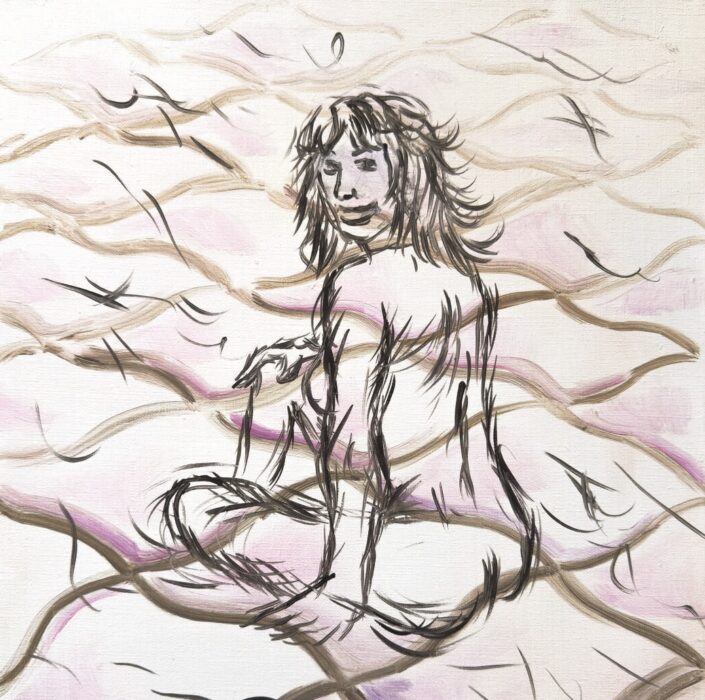
Poster image: Patryk Różycki
Technical Manager: Michał Golasa
Lighting Operator: Daniel Sanjuan Ciepielewski
Sound Operator: Andrij Pogorielov
Props Master: Tomasz Trojanowski
Stage Technicians: Mateusz Bożym, Kornel Komaniecki, Marcin Puanecki, Tomasz Trojanowski, Mariusz Basiak, Łukasz Winkowski
Wardrobe Assistant: Elżbieta Kołtonowicz
Make-up Artists: Milena Jura, Agata Lipińska (standing in for Dominika Zatońska-Mosior during the premiere and dress rehearsals)
Scenography Construction Specialist: Tomasz Ciężarek
Carpenter: Tadeusz Tomaszewski
“Fear of Flying” is presented by arrangement with United Talent Agency.
Translation: Anna Dzierzgowska
Photos
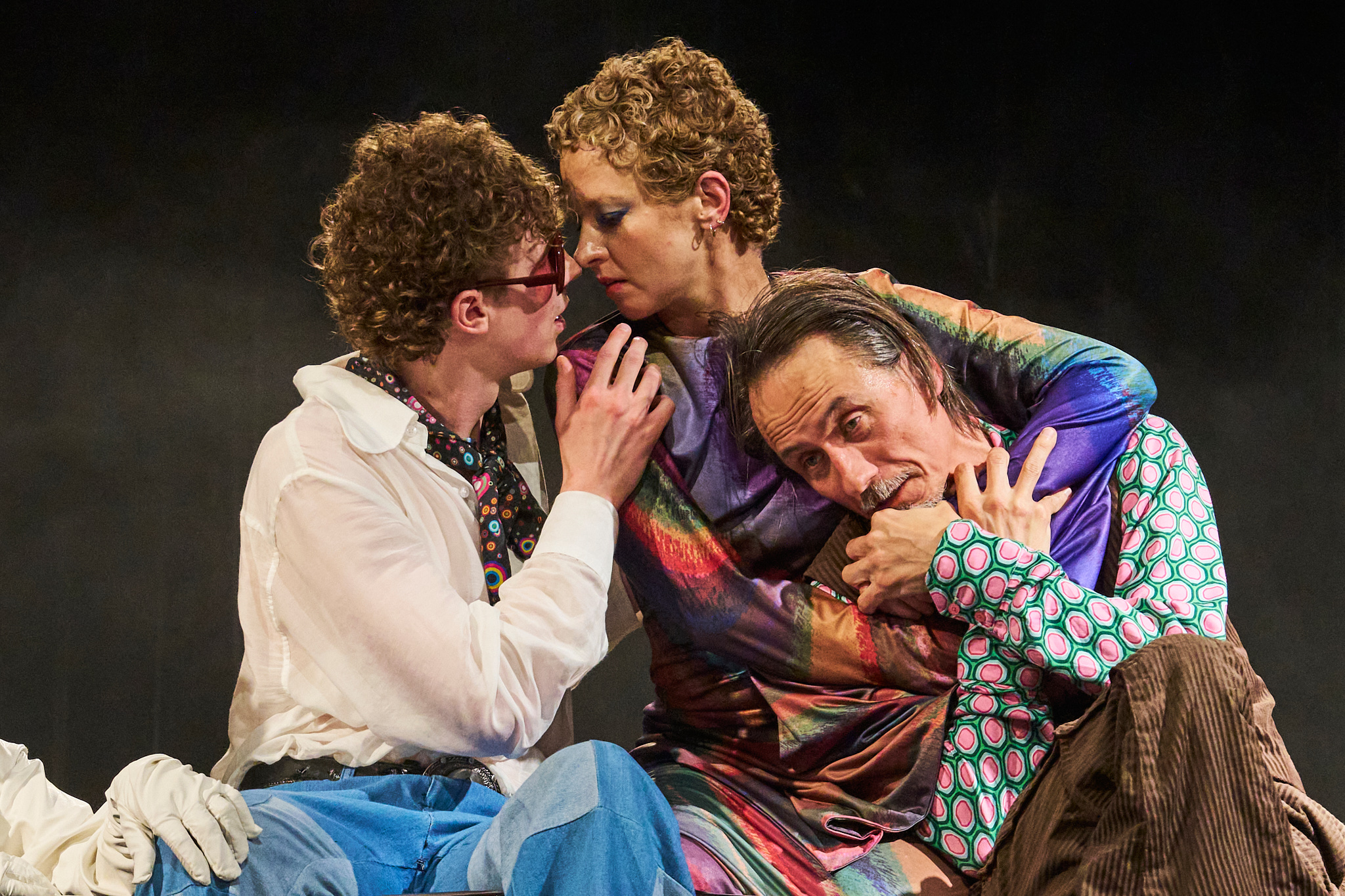
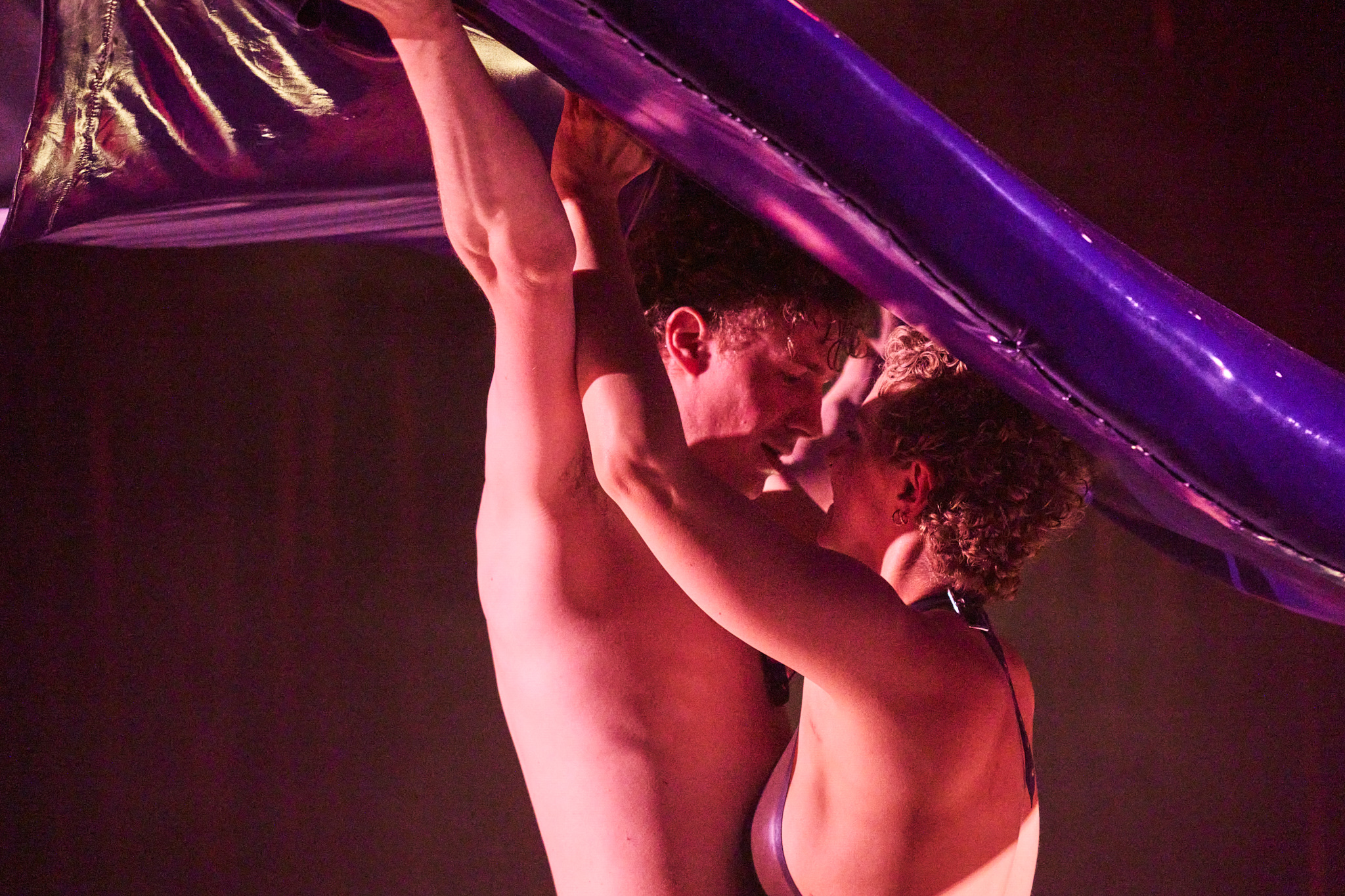
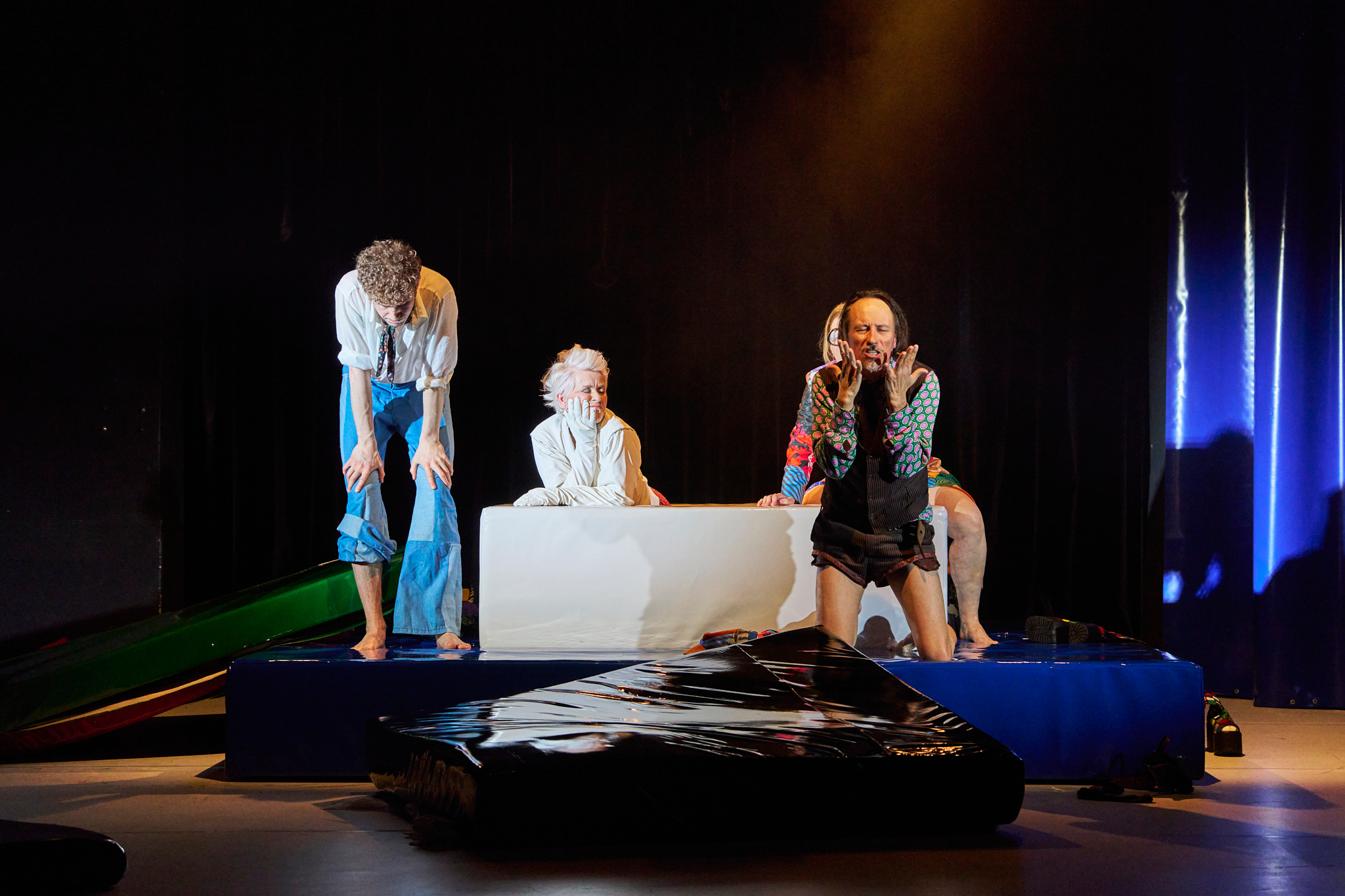
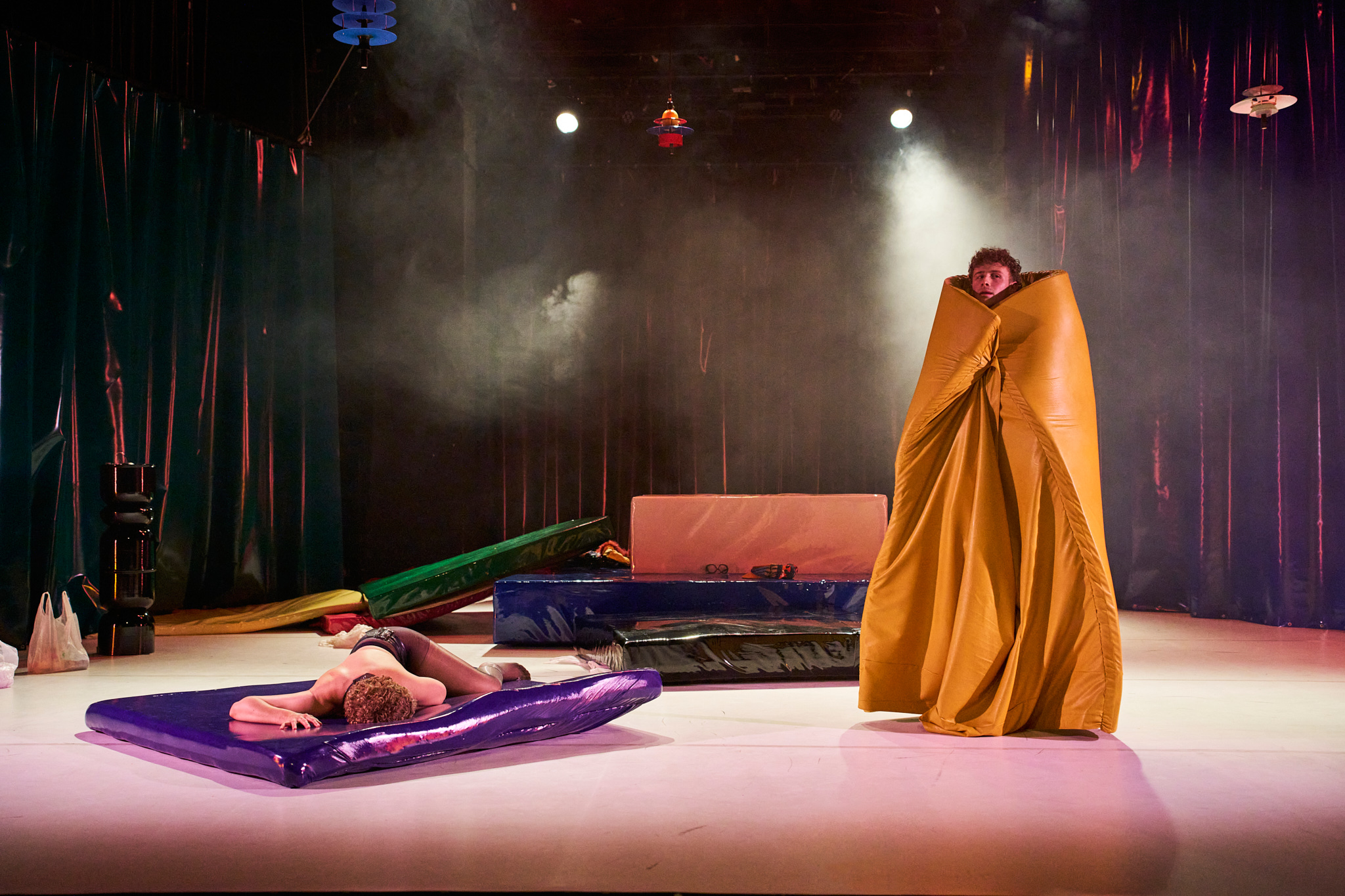
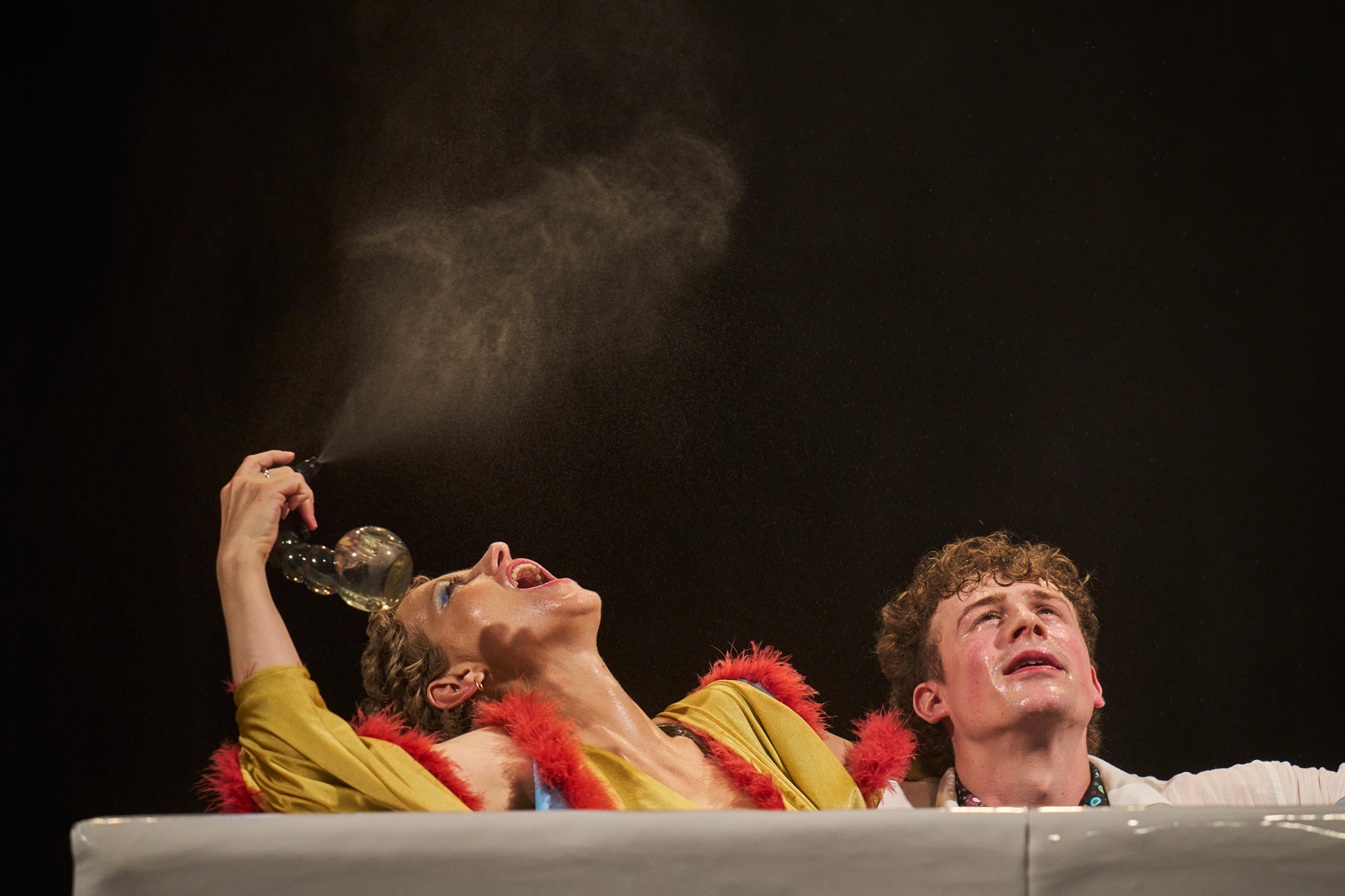
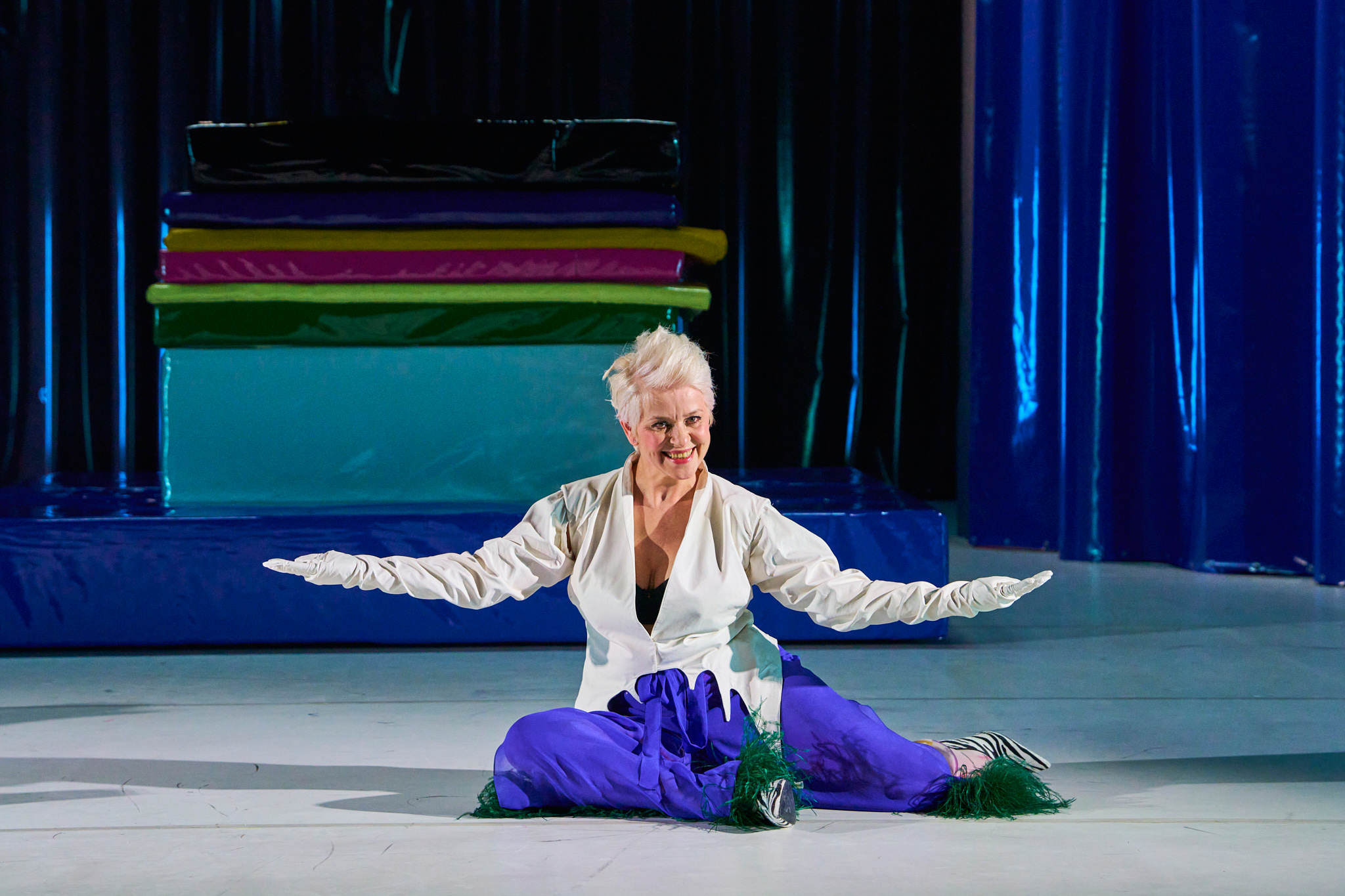
fot. Adrian Lach
-
In Fear of Flying, Weronika Szczawińska showcases her superpowers. How do you create a performance today that is strongly feminist while also being decidedly politically incorrect? How do you simultaneously juggle intellectual conventions in a sophisticated way and put something on stage that is wildly funny—funny in the sense of a deep, belly laugh rather than a refined chuckle? These are the kinds of things that, at least nowadays, tend to succeed more often in Anglo-Saxon culture than on the banks of the Vistula. Yet they have just succeeded on the stage at Marszałkowska 8.
-
The creators of the TR Warszawa production, Weronika Szczawińska and Piotr Wawer Jr., amplify the novel’s comic dimension, and the charismatic Marta Nieradkiewicz, in the leading role, delivers this interpretation with remarkable flair. She is ably supported by Rafał Maćkowiak as Bennett and Filip Zaręba as Adrian—portrayed here as much younger than in the novel—as well as Beata Bandurska as Isadora’s mother and Aleksandra Matlingiewicz in the dual roles of her sister and friend.
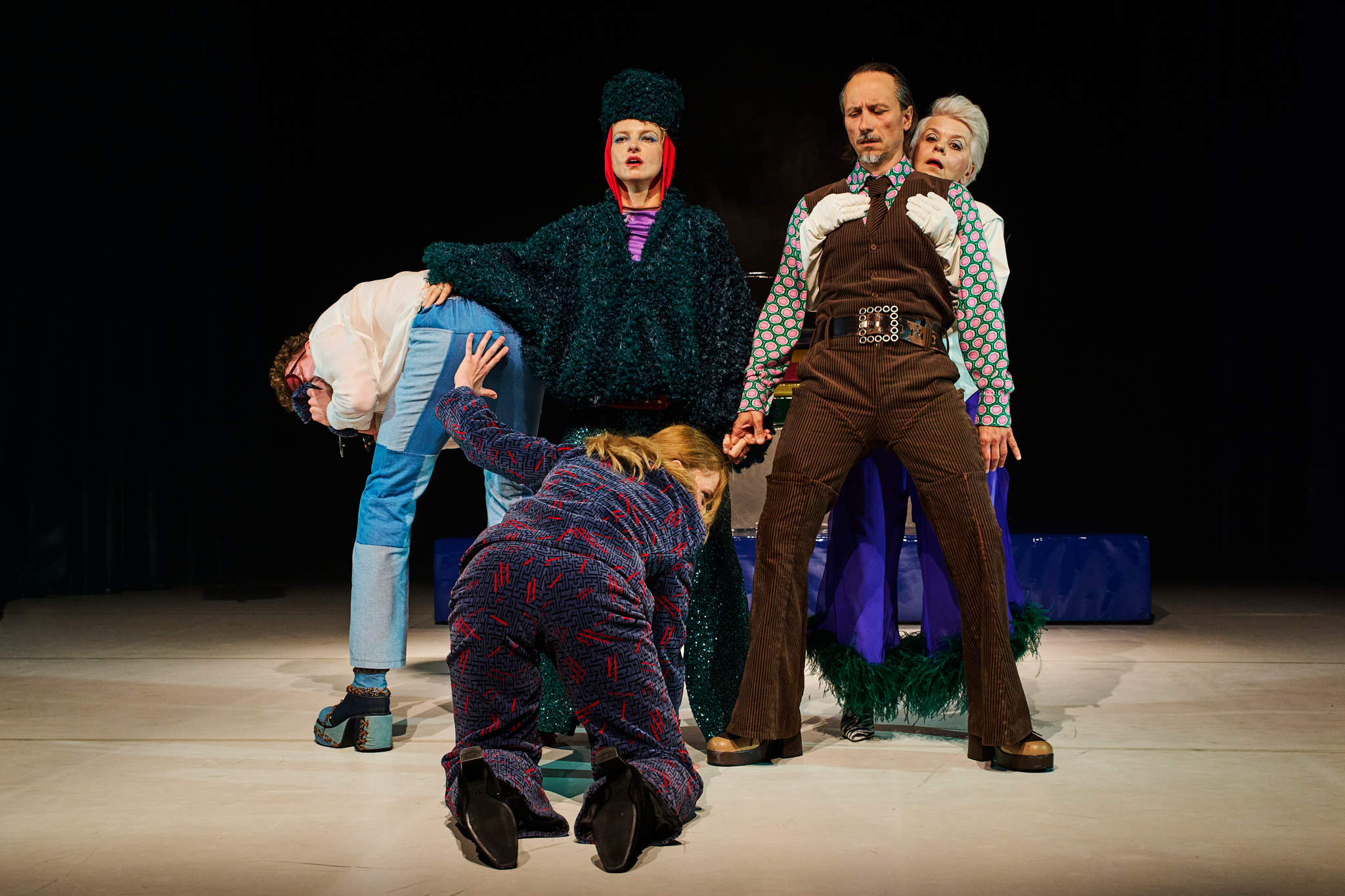
The production abounds in slapstick: there are “conversations” between buttocks, choreographed sequences built around frictional movements, and a dazzling sex scene staged as a dance of mattresses, culminating in the performers dousing one another with yogurt. The laughter is liberating, yet it also creates a certain—perhaps protective—distance from the protagonist’s actions, allowing the audience to calmly ask themselves where we stand half a century after the publication of „Fear of Flying” and two years after the release of its new Polish translation. -
It had been a long time since a theatre production gave me as much joy as „Fear of Flying”, directed by Weronika Szczawińska with Alicja Czyczel as co-director, which premiered at TR Warszawa in June. […]
Marta Nieradkiewicz’s Isadora seems to have stepped straight out of „Fleabag”: feisty, slightly cheeky, fearless, exuberant, and virtuosic. Every so often, she turns directly to the audience, breaking the fourth wall. […]
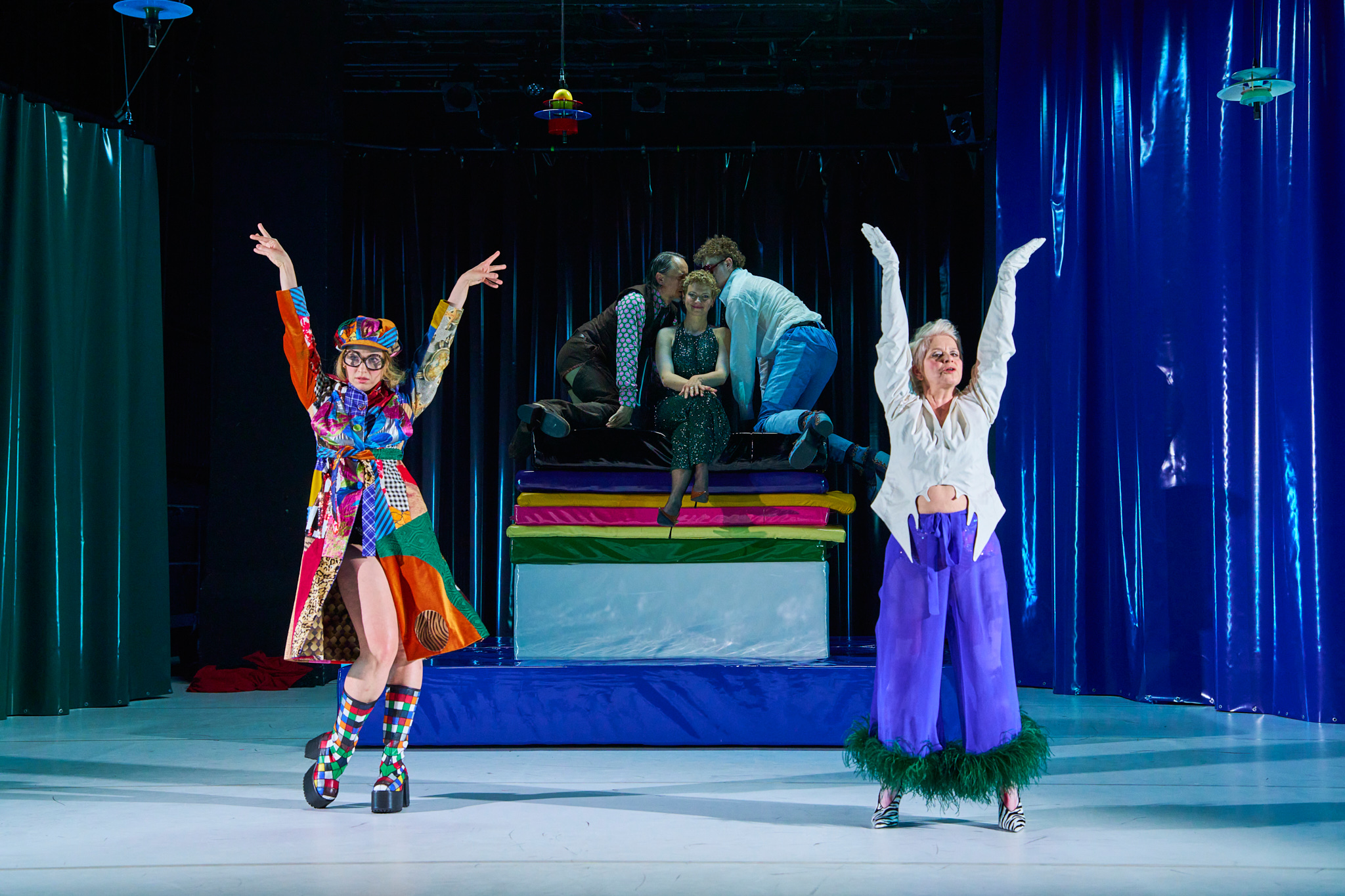
„Fear of Flying” is an unapologetically bold production—visually stunning, thanks to Marta Szypulska’s superb Bauhaus-inspired set design and colourful, shimmering costumes; funny, bawdy, moving, and thoroughly accessible, with performances delivered with tremendous verve. But one of its greatest strengths is that it invites genuine identification with its characters and their experiences and emotions. Which of us has never felt lost in our relationships? Who has never longed to break free from routine with something wild and exhilarating, despite the risks? Who has never feared that life is heading in the wrong direction, slipping through their fingers? Who has never worried about turning into their own mother? -
This is, above all, a very beautiful production. The palette of colors used in the costumes and set design carries tremendous energy (set and costume design by Marta Szypulska); the sense of playfulness and joy, palpable in the actors’ performances as well, is infectious. […] In Piotr Wawer Jr.’s adaptation, the novel’s humor is brought out remarkably well.
-
The love scene between Isadora and Adrian is sheer madness—a masterstroke, a knockout, an absolute triumph. It was impossible to take your eyes off Marta Nieradkiewicz and Filip Zaręba, who played with their roles with childlike delight. Rafał Maćkowiak was fantastic as Bennett, a man with a Franciscan acceptance of his wife’s unfulfilled lust. We also have the phenomenal Beata Bandurska as Mommy and Aleksandra Matlingiewicz as Randy. The sixth character in this production is the eye-catching, meticulously conceived and exquisitely crafted costumes designed by Marta Szypulska.
-
Marta Nieradkiewicz’s Isadora is brazen, vivid, and sharp-edged—in passion as much as in desperation and despair. At times she seems almost comic-book-like, as though she were the very embodiment of liberated womanhood, a feminist icon reflected in a slightly distorting mirror. She is part Bridget Jones, part the self-aware narrator of the TV series „Girls”. She approaches everything as an adventure, throwing herself headlong into every situation without a second thought. She speaks about sex and bodily functions with a candour that pushes the boundaries of conventional propriety, while at the same time treating these subjects with irony and a knowing wink.
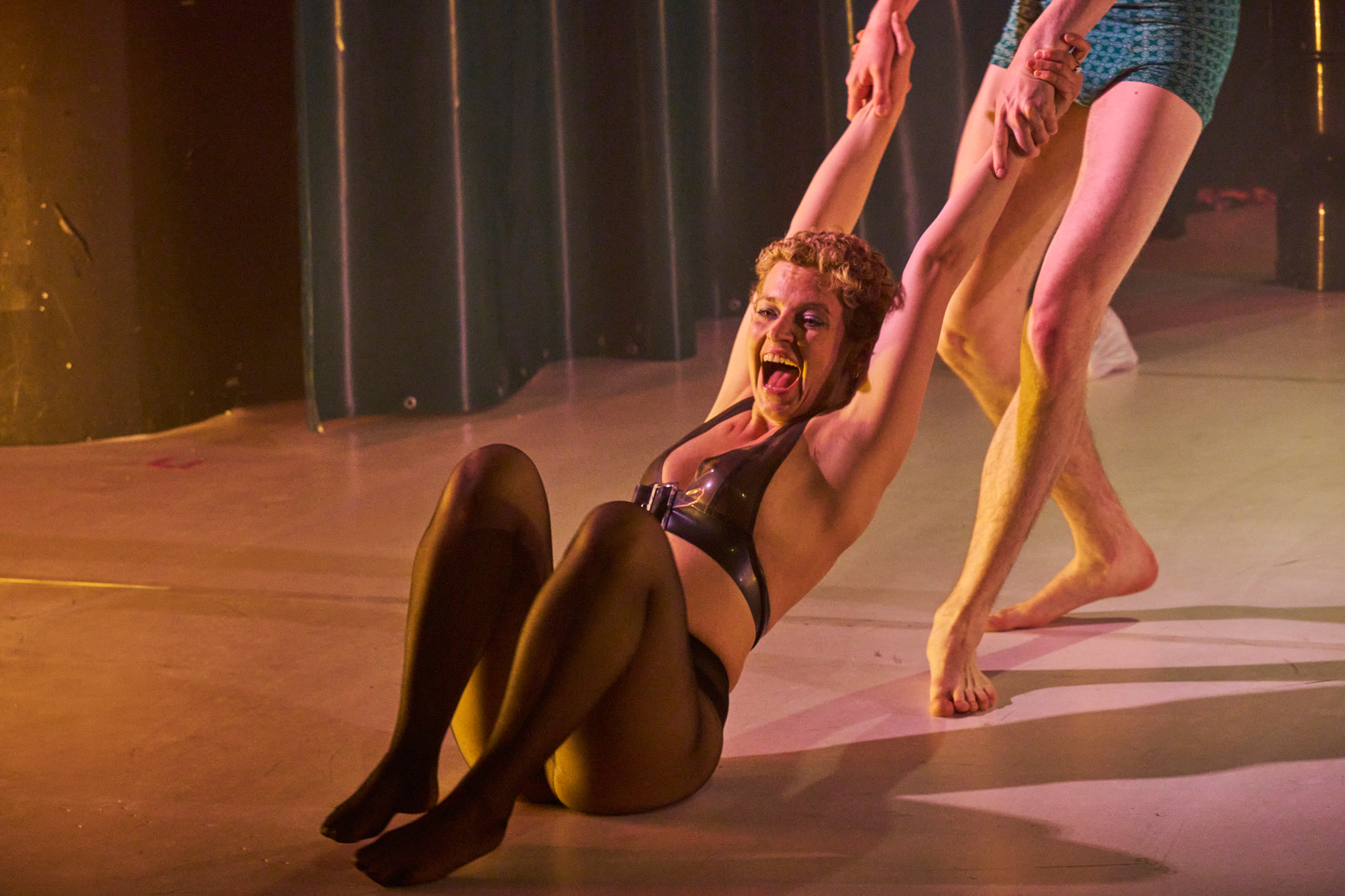
It is precisely this irony that gives the production its distinctive strength. Staged in a disco-inspired aesthetic, it revels in the era’s music, sequins, flared trousers, latex, and theatrical haze. […]
The creators draw above all on the humour, satire, and farcical elements of Erica Jong’s novel. Director Weronika Szczawińska delights in playing with theatrical convention. The actors perform the same scene in a variety of styles: at one moment as film noir, the next in the vein of the Polish “cinema of moral anxiety,” and then as soft-core erotica. They present events first from the women’s perspective, then from the men’s, asking what in „Fear of Flying” has become dated—and what remains timeless.